Utility dogs: adult
Utility dogs are a mixed group of mostly non-sporting breeds, many of which were selected for specific purposes outside the sporting and working categories. For an owner today, that variety means looking closely at the individual breed's exercise, coat and day-to-day management needs rather than expecting one utility pattern.
Example breeds in this group: Bulldog, Dalmatian, French Bulldog, Miniature Schnauzer, Poodle (Standard).
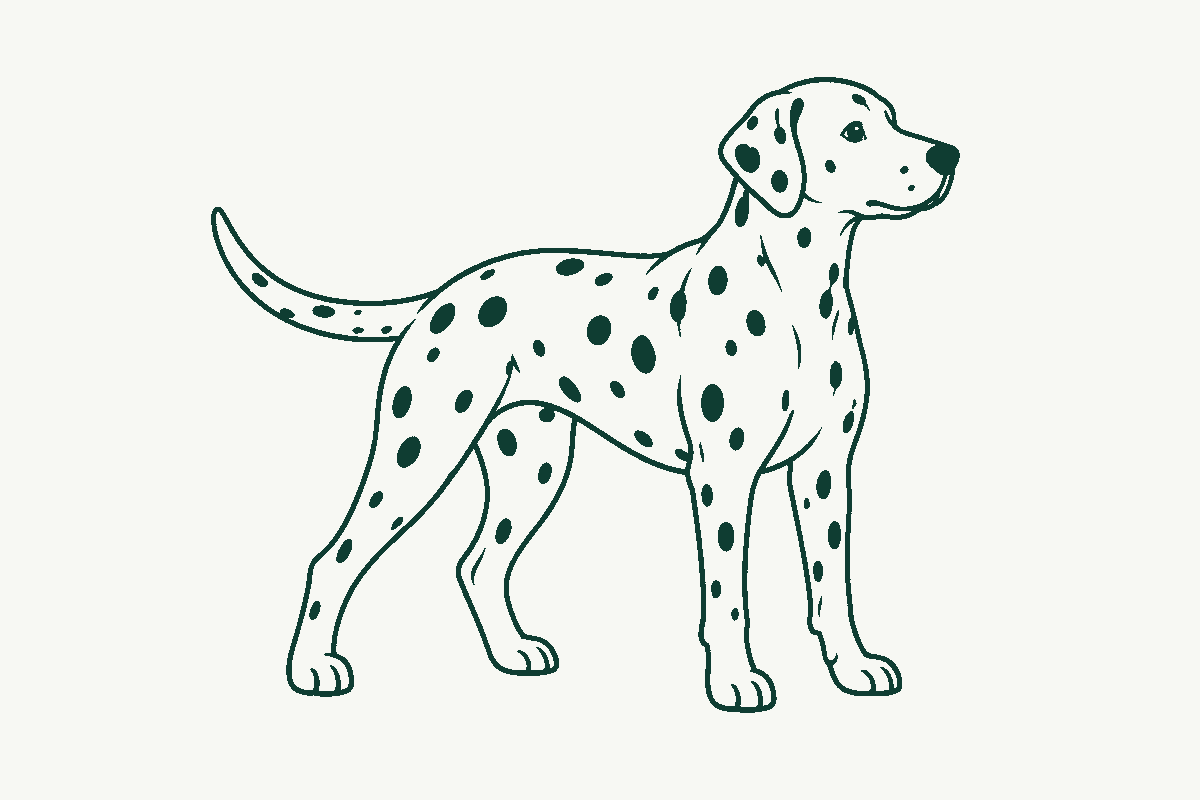
Adult utility dogs range from high-stamina Dalmatians to flat-faced companion breeds, so exercise, breathing, weight and grooming need individual planning.
-
The Kennel Club lists the Dalmatian as a large utility breed needing more than 2 hours of exercise per day, with once-weekly grooming. It describes the breed's history as a coach dog that trotted alongside horse-drawn carriages and guarded stables at night.
Source: Dalmatian | Breeds A to Z | The Kennel Club, The Kennel Club -
The Kennel Club and University of Cambridge Respiratory Function Grading Scheme assesses dogs for BOAS, and the page lists utility breeds including Boston Terrier, Bulldog, French Bulldog and Shih Tzu among those eligible. The scheme says dogs can be assessed from 12 months and that repeat assessment is recommended every 2 years because BOAS can change over a dog's lifetime.
Source: Respiratory Function Grading Scheme, The Kennel Club -
PDSA says being overweight is linked to several health problems and a reduced lifespan, and lists breathing problems in flat-faced breeds among the health risks. It advises using body condition scoring as well as weight, and contacting your vet if you are struggling to keep your dog at a healthy weight.
Source: Obesity in dogs, PDSA, 2023 -
PDSA says grooming gives owners a chance to check for illness, injury and weight changes, and notes that long-haired breeds such as Lhasa Apsos need daily brushing while short-haired breeds often need only weekly brushing. Because the utility group includes both coat types, use the breed's coat rather than the group name to plan grooming.
Source: How often should you groom your pet?, PDSA
Published information, not advice for your pet
Ask your vet.