Pastoral dogs: adult
Pastoral dogs were bred to herd livestock, from the small Shetland Sheepdog to the large German Shepherd Dog — most carry a weatherproof double coat and a strong need for mental work, not just exercise.
Example breeds in this group: German Shepherd Dog, Border Collie, Shetland Sheepdog, Australian Shepherd, Pembroke Welsh Corgi.
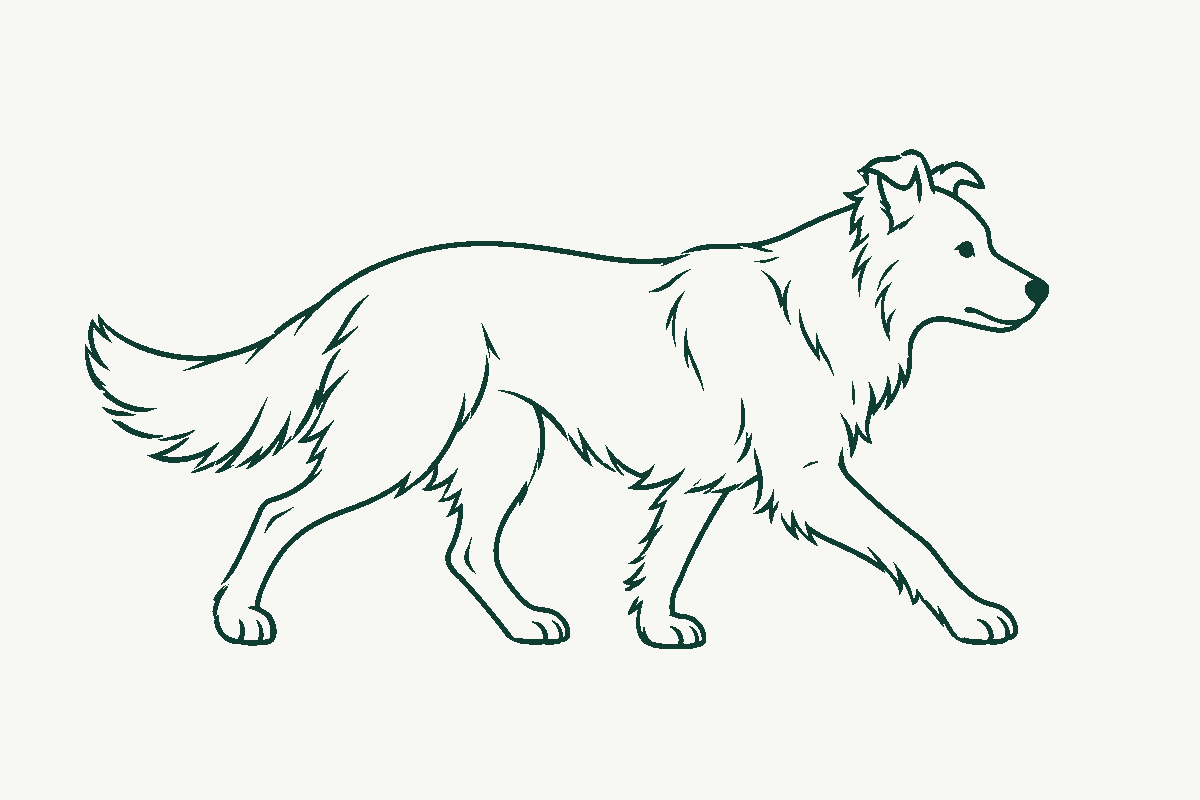
Most herding breeds need serious daily exercise and mental stimulation, and this is one of the few groups with a documented multidrug-sensitivity gene that's worth knowing about before your vet prescribes certain medicines.
-
German Shepherd Dog, Border Collie and Australian Shepherd are listed as needing more than two hours of exercise a day, while Shetland Sheepdog and Pembroke Welsh Corgi are listed at up to one hour — the range within this group is wide, so check your own dog's breed page rather than assuming.
Source: Border Collie | Breeds A to Z, The Kennel Club -
A gene variant that causes sensitivity to certain drugs (ABCB1, sometimes called MDR1) is documented most often in collie-line herding breeds — Border Collie, Australian Shepherd, Shetland Sheepdog and White Swiss Shepherd — a DNA test exists, and it's worth telling any vet treating your dog if the breed is in this group.
Source: Breed is associated with the ABCB1-1Δ mutation in Australian dogs, Australian Veterinary Journal, 2020 -
Hip dysplasia is commonly linked to German Shepherd Dog and Border Collie, and elbow dysplasia to German Shepherd Dog — both are screened for by X-ray from 12 months old, and parents' results can be checked before choosing a puppy.
Source: BVA Hip Dysplasia Scheme, BVA -
Collie eye anomaly and other inherited eye conditions are documented across several Pastoral breeds beyond puppyhood — the inherited eye disease list also names hereditary cataract in Australian Shepherd and Belgian Shepherd varieties, and progressive retinal atrophy in Australian Cattle Dog, Cardigan Welsh Corgi and Swedish Vallhund.
Source: Known Inherited Ocular Diseases: breeds affected and type of disease, BVA / The Kennel Club / ISDS, 2026
Published information, not advice for your pet
Ask your vet.