Pastoral dogs: senior
Pastoral dogs were bred to herd livestock, from the small Shetland Sheepdog to the large German Shepherd Dog — most carry a weatherproof double coat and a strong need for mental work, not just exercise.
Example breeds in this group: German Shepherd Dog, Border Collie, Shetland Sheepdog, Australian Shepherd, Pembroke Welsh Corgi.
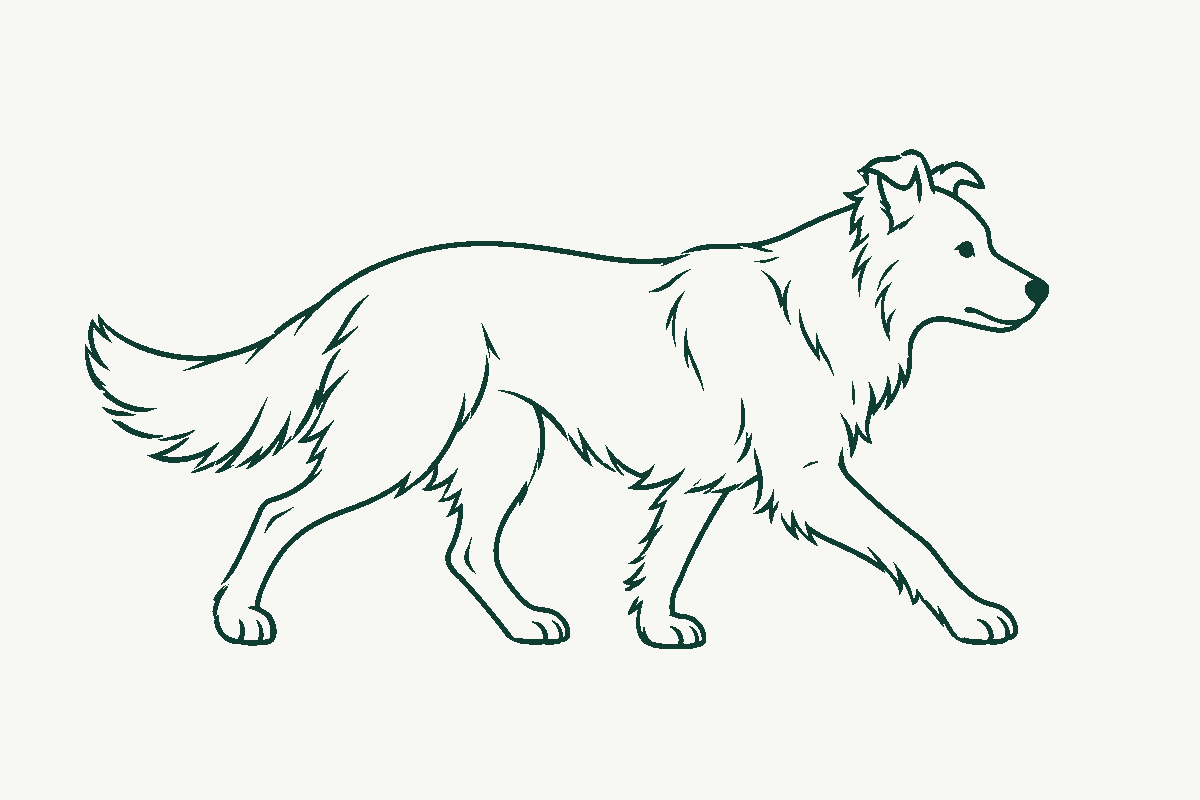
German Shepherd Dogs have the best UK research base in this group and show clear joint and neurological themes with age — six-monthly checks are the general recommendation as any herding breed gets older.
-
UK veterinary professionals in a funded survey most often recommended six-monthly visits for senior dogs (defined as seven-plus), while owners more often assumed once a year was enough — slowing down, stiffness on rising and dental tartar were the changes most often wrongly put down to "just old age".
Source: New research highlights ageing dog healthcare needs, BSAVA, 2024 -
In UK primary-care research on German Shepherd Dogs, osteoarthritis was among the most commonly recorded disorders, and musculoskeletal disease or an inability to stand were among the most common recorded causes of death, at a median age of about 10.
Source: Demography and disorders of German Shepherd Dogs under primary veterinary care in the UK, Canine Genetics and Epidemiology, 2017 -
Degenerative myelopathy, a slow-progressing spinal cord disease usually starting between 7 and 14 years old, has a Kennel Club risk DNA test for German Shepherd Dogs — a positive result is a risk marker, not a diagnosis, and is worth discussing with a vet or breeder.
Source: DNA test – degenerative myelopathy (DM), The Kennel Club -
Inherited eye disease can appear late — the official eye scheme includes a check for breeding dogs over eight years old specifically so late-onset conditions aren't missed, alongside the usual senior themes of weight change, lumps and dental disease that apply to any older dog.
Source: CHS month: What exactly is the BVA KC ISDS Eye Examination Scheme?, BVA, 2019
Published information, not advice for your pet
Ask your vet.